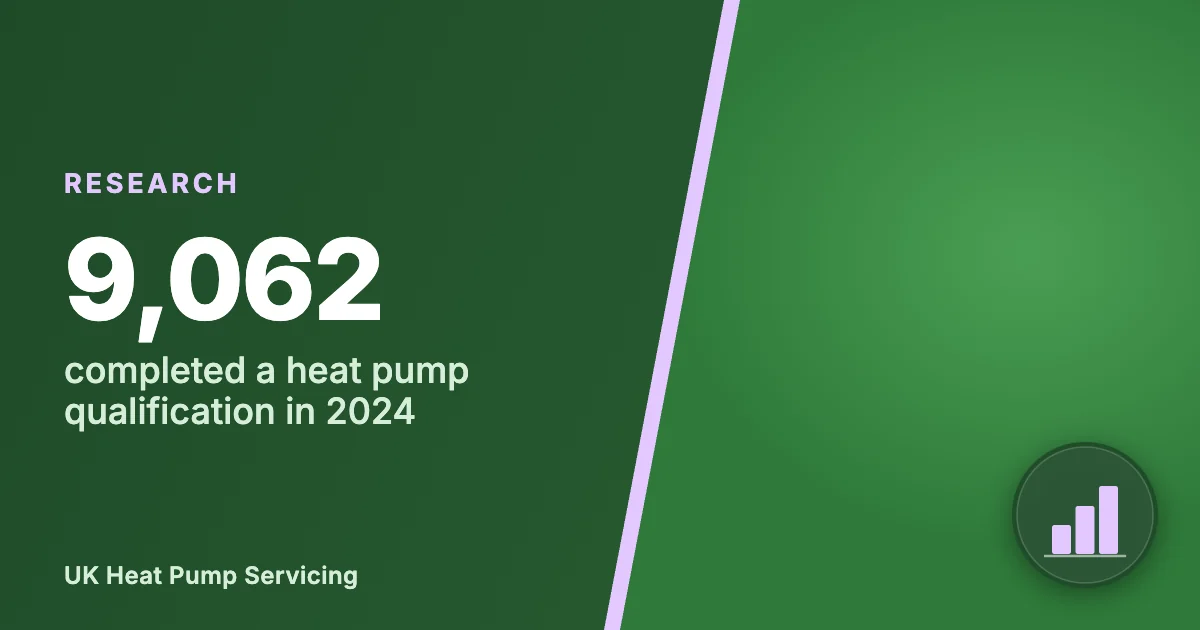
The Heat Pump Association reports that 9,062 individuals completed a recognised heat pump qualification in 2024. That is a measure of training activity. The availability of qualified people actively installing, commissioning and repairing systems in a particular area is a separate question. Source: Heat Pump Association workforce infographic.
Where is the evidence of a shortage?
The practical indicators are local lead times, the proportion of trained engineers doing the work and how many installations each team can complete. Installation capacity and service capacity can diverge because diagnosis relies on different experience, access to parts and willingness to travel. National completions offer little detail on any one postcode.
To see where our engineers work, browse the towns and cities we cover.
What does the government target imply?
The Warm Homes Plan set an aim for the market to exceed 450,000 annual heat pump installations by 2030. At an illustrative 30 installations per team per year, 450,000 installations would require the equivalent output of 15,000 teams. At 50 per team it would require 9,000. Those are scenarios, and the target spans a wider market than the domestic retrofit count featured in the deployment articles. Source: Warm Homes Plan.
Our guide to the UK heat pump market sets the target against recent installation numbers.
What would a local workforce benchmark track?
Track the time to a survey, first installation date and first available repair visit. Separate planned work from urgent faults and any delay for parts. Combined with active business counts, those measures would tell homeowners more about availability than the training total on its own.
When a repair is urgent, our emergency heat pump repair page explains what to do first.