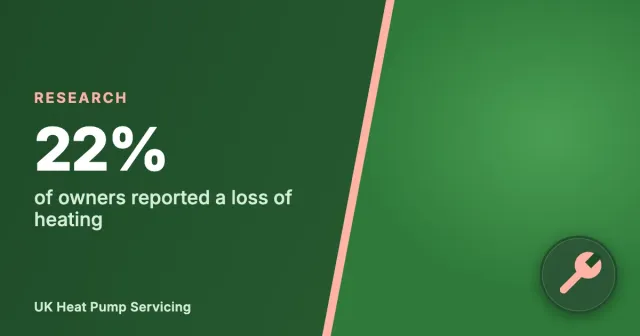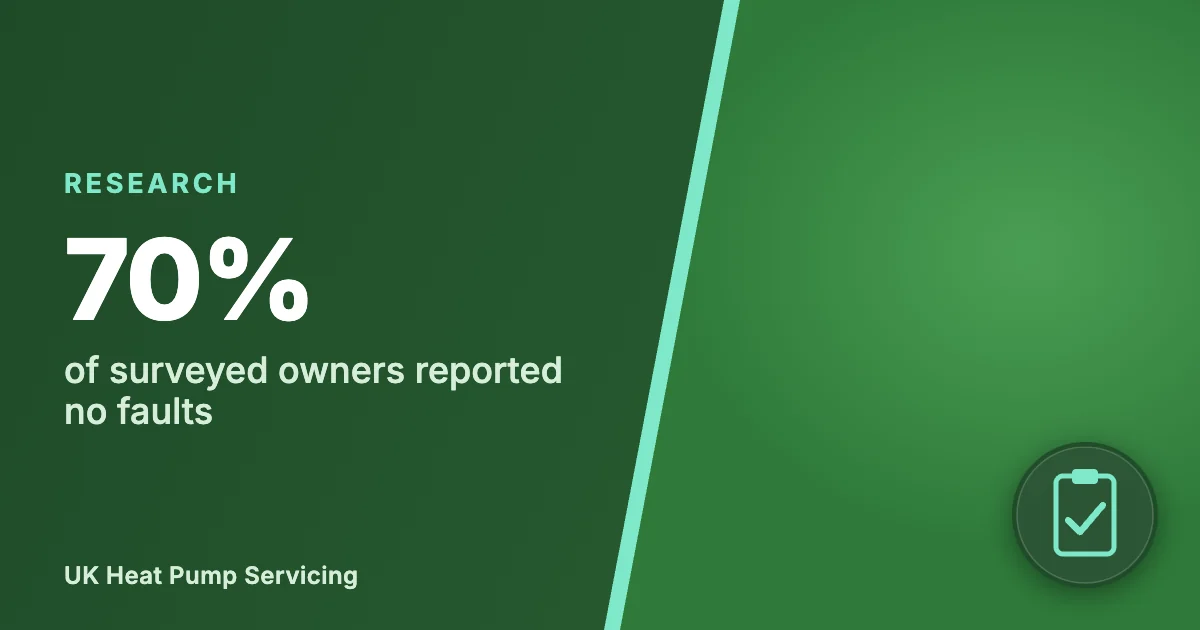
In a government evaluation of the Boiler Upgrade Scheme, 70% of follow-up respondents reported no faults with their low-carbon heating system and 29% reported a fault. The question included related equipment installed at the same time, such as radiators, pipework and hot water tanks. The finding describes participants in England and Wales and includes the wider system. Source: DESNZ evaluation, faults and complaints.
What does a reported fault mean?
A reported problem can be a component failure, an issue with an ancillary part or a problem with how the system was installed. The study used self-reported experiences after at least one heating season. Its fault question pooled two waves of owners who still had their funded system, with an unweighted base of 3,721. The figures are rounded and the residual includes other responses.
If your own system has stopped, our guide to a heat pump not working covers the first checks, and our guide to heat pump error codes lists the common codes by brand.
What would a lifetime reliability comparison need?
A useful comparison would follow heat pumps and boilers of similar age over the same number of winters. It would record system type, repair visits, outages, installation quality and whether the underlying issue involved the main appliance. One repair call and a repeat visit for the same problem would count as one incident if reporting the rate of first faults.
What can homeowners ask for?
Check who handles commissioning faults, which parts have separate warranties, and whether a service history is required. Ask who to call if both heating and hot water stop during cold weather. A clear route to diagnosis matters as much to a household as the headline survey result.
If a fault does need an engineer, our heat pump repair page explains how a visit is booked.