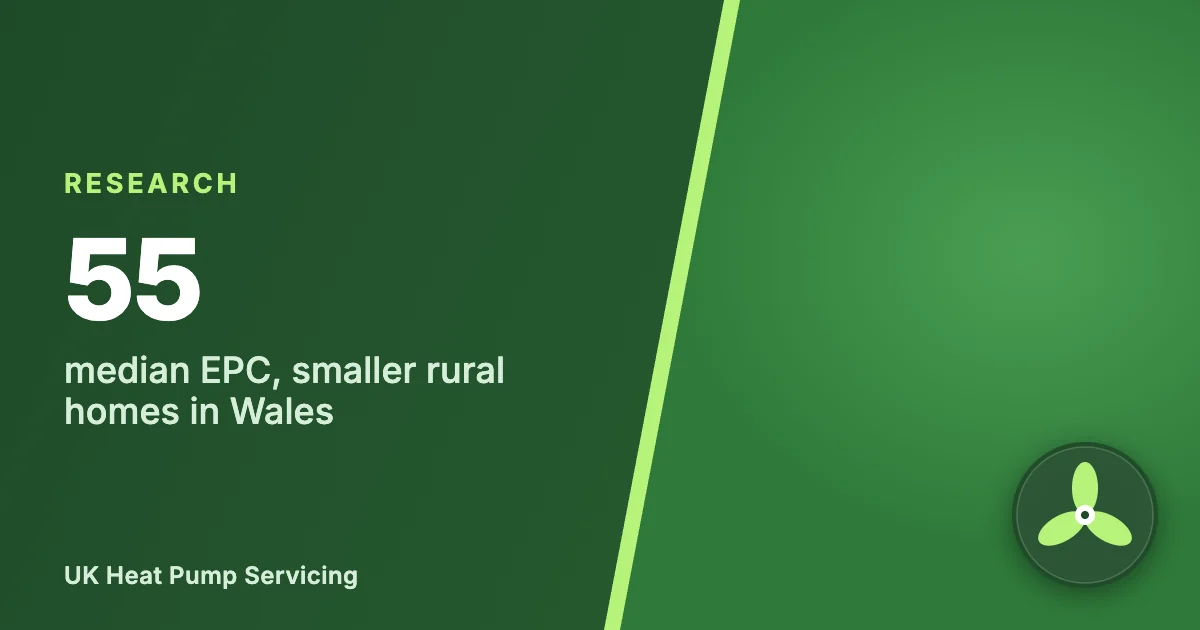
Existing homes in smaller rural areas had median EPC scores of 59 in England and 55 in Wales, compared with 68 for existing urban properties in both nations. That describes the homes in the ONS dataset. The rating describes modelled energy costs and provides an indication of where a survey may find more to investigate. Source: ONS housing energy efficiency, section 5.
Is a Victorian house harder to heat?
Age can suggest likely construction, such as solid brick walls in some older homes, but improvements can change how the property behaves. Two terraces built in the same decade can have different insulation, glazing and exposed wall areas. A mid-terrace typically shares more wall area than an end terrace, all else equal.
How well a system performs once it is running is covered in our research on real-world heat pump efficiency.
What makes an older home a more involved installation?
Look at how much heat each room loses on the design day and whether its available radiator space can meet that load. A draughty extension, small radiator or unusual pipe layout can shape the quote more than the year the main house was built. Consider damp management and building-specific approvals before changing the fabric of older or protected homes.
Our guides to heat pump radiators and heat pump sizing explain how room heat loss is matched to emitter output.
What should a buyer request?
Get a room-by-room heat loss calculation and proposed emitter schedule. Ask the installer to show where insulation or draught reduction would change the size of the equipment. The ONS figures are based on homes with EPC records, and coverage differs by property age. Use them for context when comparing areas, then assess the individual building.