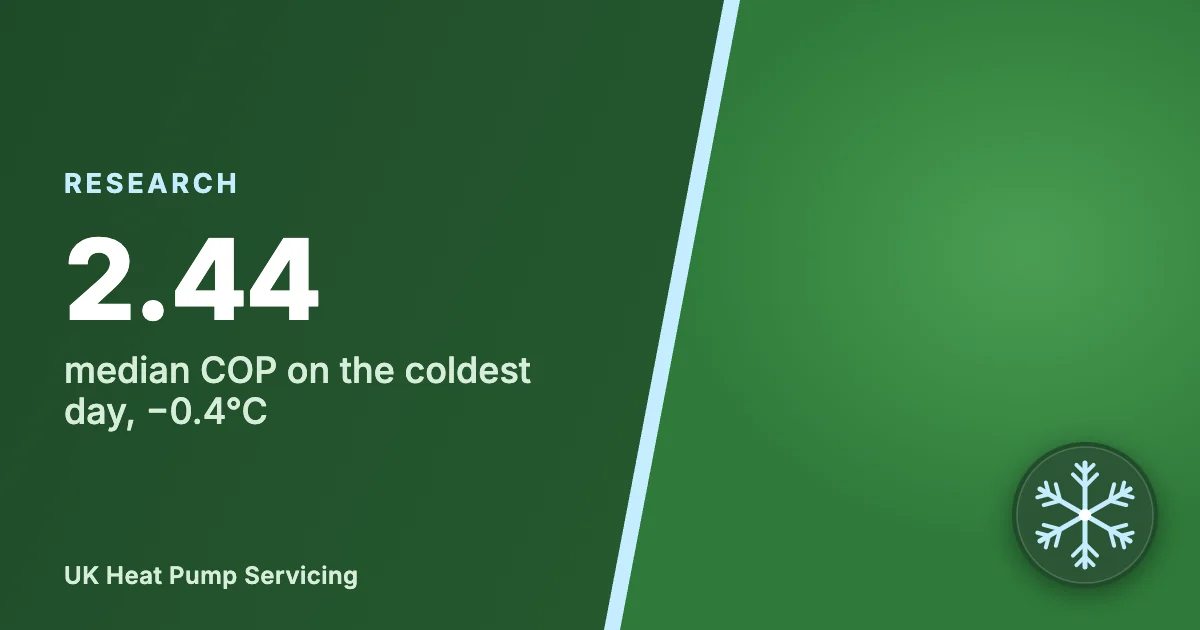
Air source heat pumps can deliver heat below freezing. In Energy Systems Catapult’s interim field analysis, the median cold-day COP was 2.44, at an average outdoor temperature of −0.4°C. The middle half ranged from 2.20 to 2.70, across 484 systems in this analysis. Source: Catapult report, section 10.
Why electricity use rises as temperatures drop
The heat pump moves heat from colder outdoor air into warmer water. As the difference between those temperatures grows, the compressor usually needs more electricity for each unit of heat. The building can also lose heat faster in colder weather. Both effects can push consumption up on a cold day.
What if you see frost or steam?
Some frost on an outdoor coil is expected under cold, damp conditions. An automatic defrost cycle melts it. Water beneath the machine and a brief plume of vapour can accompany that cycle. Persistent heavy ice, repeated faults or a sustained loss of heating should be reported using the process in the owner’s manual.
Our guide to the heat pump defrost cycle explains how long a cycle runs, and our guide to a frozen outside unit covers when ice is a fault. The fan can sound different during a defrost; our research on heat pump noise explains how sound levels are compared.
What about −5°C, −10°C and −15°C?
Look for the manufacturer’s tested output and COP for the exact model at each available air and water temperature. Compare that output with the home’s design heat loss and check where backup heat is expected. A trial result near freezing cannot establish a universal performance curve at colder temperatures. For sizing, available heat output in kW and electricity required to deliver that output are both relevant.
If the heating stops in a cold spell, our emergency heat pump repair page explains what to do first.