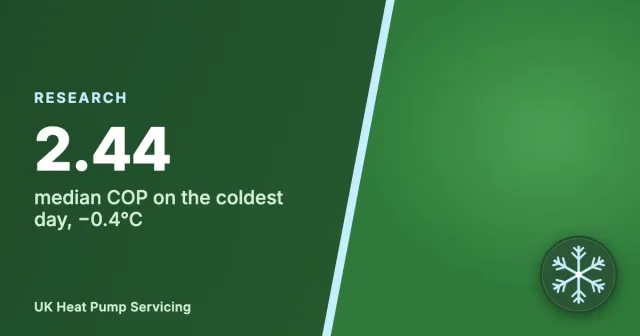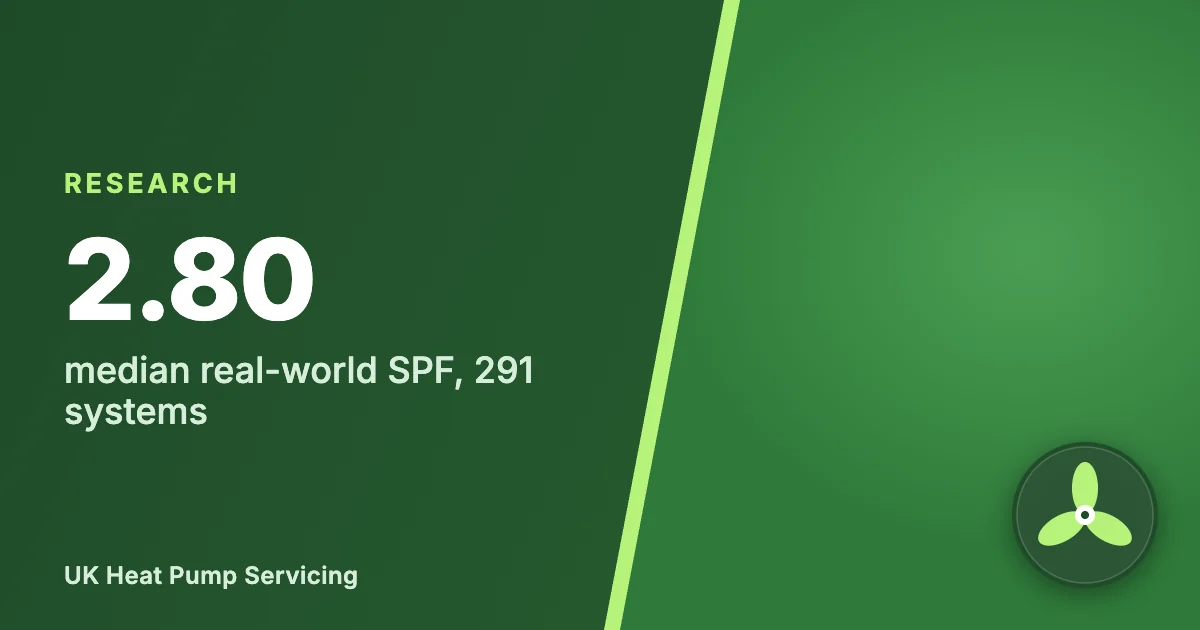
An air source heat pump in the Energy Systems Catapult demonstration project delivered a median 2.80 units of useful heat per unit of electricity on the study’s wider SPF H4 measure. The middle half of the 291 monitored systems in that comparison scored 2.53 to 3.09. At those three efficiencies, a home needing 10,000 kWh of useful heat would use roughly 3,953, 3,571 or 3,236 kWh of electricity. Source: Catapult interim report.
Which heat pump efficiency figure should you use?
COP is a ratio measured at a particular point or over a short period. Seasonal performance factor (SPF) totals the heat and electricity over a longer period. The study’s H4 measure accounts for more of the heating system’s electricity use than H2. Its median H2 figure was 2.94 for the same sample. Use the same meter boundary when comparing estimates, particularly when one figure includes an immersion heater or circulation pumps.
Our guide to COP, SCOP and SPF explains how each measure is calculated.
Why similar systems can produce different results
The outdoor temperature, water temperature and hot water schedule all affect the work the compressor does. A house that can stay warm with cooler radiators gives its heat pump a smaller temperature lift. Ask for a room-by-room heat loss estimate and the proposed design flow temperature, then compare the proposal with heating and hot water demand for your home.
Flow temperature is the setting most owners can influence: weather compensation lowers it automatically on milder days. Older properties face the largest lift, as our research on heat pumps in older homes shows.
Can you calculate your own SPF?
If your system has separate heat and electricity meters, divide total useful heat by total electricity for the same period. Confirm which devices the electricity meter covers. Include a full winter before treating a short reading as seasonal performance. The project figures are field observations from one sample, and the household example above is arithmetic using those observations.
If a reading looks low for the season, a heat pump efficiency check compares measured performance with the system’s design.